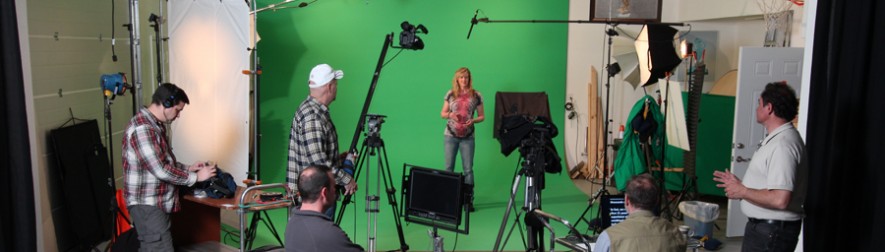
For executives, engineers, clinicians, and sales leaders who don’t live on camera, a teleprompter is the fastest path to polished delivery. It doesn’t make people sound robotic—poor setup and coaching do. With the right script, optics, and operator, a teleprompter frees your talent to focus on presence while your brand stays on message.
Why Teleprompters Work (For Non-Actors, Too)
- Cognitive relief: No memorization. Working memory goes to tone, pace, and connection.
- Message fidelity: Brand, legal, and technical language are delivered accurately.
- Schedule control: Fewer restarts and pickups reduce crew hours and room time.
- Consistency at scale: Multiple speakers, one voice—ideal for product lines and multi-market rollouts.
Best Use Cases
- Leadership announcements and culture messages
- Product explainers and regulated claims
- Training modules and onboarding
- Fundraising and investor updates
- Multi-language/localized content (script-first translation)
Script Engineering: Write for the Mouth, Not the Page
- Pacing: 120–140 words per minute for non-professional talent; shorten dense sentences.
- Structure: One idea per sentence. Favor active voice and concrete nouns.
- Readability: Sentence case, short lines, generous line breaks; avoid all caps in body copy.
- Pronunciation: Add phonetics for jargon and names (e.g., “biologics (bye-oh-LAH-jiks)”).
- Performance cues: Light markers—[beat], [smile], [gesture small], [hold]—to shape cadence.
- Two versions: A Full script for complete info and a Tight script for time-boxed reads.
- Compliance: Lock “do-not-change” claims early and highlight them for the operator.
Optics & Lighting That Flatter Prompter Reads
- Lens choice: Full-frame 85–135mm (or 50–85mm on Super35) to compress micro eye movement.
- Camera distance: Back the camera up; use longer focal length to maintain intimacy without eye drift.
- Prompter glass size: Larger beamsplitter for slower readers—less visible eye travel.
- Brightness balance: Match prompter luminance to key light to avoid squinting and reflections.
- Eyeglasses: Slightly tilt prompter glass and adjust key/fill angles to eliminate double-reflections.
- Line of sight: Align copy to the optical center of the lens—1–2 inches off looks “shifty.”
Coaching: Natural Over “Newsreader”
- Warm-ups: Two fast “throwaway” takes to lift energy and settle nerves.
- Thought chunking: One idea per breath; operator pauses at commas and resumes on the inhale.
- Eye focus: “Look through the lens, not at the words.” We place the lens behind the copy’s focal area.
- Hands & posture: Ground stance, unlock knees, invite purposeful hand movement in-frame.
- Energy ladder: Record passes at 90%, 100%, and 110% intensity; select per brand tone.
- Safety takes: One conversational paraphrase for authenticity, one precise read for compliance.


The Operator: Your Hidden Superpower
A dedicated prompter operator (separate from camera and director) listens, anticipates, and rides speed/emphasis live. They also:
- Manage last-minute script updates and create section bookmarks
- Insert visual signposts (— dashes, • bullets) to cue phrasing
- Coordinate with sound for breath-friendly pacing and with gaffer for glare control
Remote, Live, and Hybrid Setups
- Remote executives: Compact camera-mounted prompter with return video for live eyeline coaching.
- Webinars & keynotes: Confidence monitors near lens; headlines in the prompter keep presenters off slide-reading.
- Field shoots: Lightweight units for mobile crews; battery-backed tablets as contingency.
- AI assists (pre-production): Timing forecasts, readability passes, and pronunciation maps to set scroll targets.
When Not to Teleprompt (Or When to Go Hybrid)
- Emotion-first testimonials: Use guided beats instead of verbatim lines.
- Rapid dialog or banter: Bullet prompts or IFB ear cues often play more naturally.
- Hands-on demos: Teleprompt for open/close; let the demo breathe with beat-level notes.
Risk Management & Compliance
- Route scripts through brand/legal before shoot day; highlight locked lines.
- Capture a clean “compliance take” with slower pace and clear enunciation.
- Pre-plan captions and translations at the script stage to avoid post compromises.
What Decision Makers Can Measure
- Retake reduction: Lower crew hours and studio rental time
- Fewer approvals cycles: Pre-approved language plus accurate reads
- Message consistency: Cross-functional alignment across regions and teams
- Asset reuse: Script-aligned captions, cutdowns, and social snippets delivered faster






Troubleshooting Quick Hits
- Looks like “reading”: Increase glass size, back the camera up, bump focal length, slow scroll.
- Glare on glasses: Adjust key angle, dim prompter, add polarizer if needed.
- Eye drift: Re-center copy; ensure talent stands square to lens.
- Tripping over jargon: Add phonetics; split long nouns across lines.
- Tech failure: Keep a synced tablet backup and printed Tight script on set.
Producer Checklist
Pre-Production
- Lock Full + Tight scripts; add phonetics and performance cues
- Approve claims/legal language; highlight “do-not-change” lines
- Book large-glass unit and dedicated operator for long or technical copy
- Choose lens package (85–135mm FF equivalent); build lighting plan for anti-glare
- Schedule 20 minutes per speaker for warm-ups
On Set
- Match prompter brightness to key; confirm eyeline alignment with a 20–30s test read
- Run two high-energy throwaways; capture keeper takes at natural pace
- Record paraphrase (authenticity) and compliance (precision) passes
- Slate sections for easy post assembly and caption sync
Post
- Generate captions directly from final script (no drift)
- Deliver vertical/square cutdowns using script-aligned hooks
- Archive scripts, approvals, and pronunciation notes for future sessions
Sample Script Excerpt (Prompter-Friendly)
[smile] “If your team makes great products but struggles to tell the story on camera, there’s a fix. A pro teleprompter lets real people sound like themselves—while staying perfectly on message.” [beat] “Today, I’ll show you how we standardize delivery across teams without draining calendars.” [gesture small] “Let’s get started.”
About St Louis Video and Photo
Since 1982, St Louis Video and Photo has helped businesses, marketing firms, and creative agencies across the St. Louis area produce confident, on-brand video and photography. We’re a full-service professional commercial photography and video production company with the right equipment and a seasoned creative crew for successful image acquisition. We offer full-service studio and location video and photography, along with editing and post-production, and licensed drone pilots. St Louis Video and Photo can customize your productions for diverse media requirements, and we specialize in repurposing your photography and video branding to gain more traction across channels. We’re well-versed in all file types and styles of media and accompanying software, and we use the latest Artificial Intelligence across our media services for speed and consistency. Our private studio lighting and visual setup is perfect for small productions and interview scenes, and our studio is large enough to incorporate props to round out your set. We support every aspect of your production—from setting up a private, custom interview studio to supplying professional sound and camera operators, as well as providing the right equipment—ensuring your next video production is seamless and successful. And yes, we can fly our specialized drones indoors.


 St Louis Video & Photo